
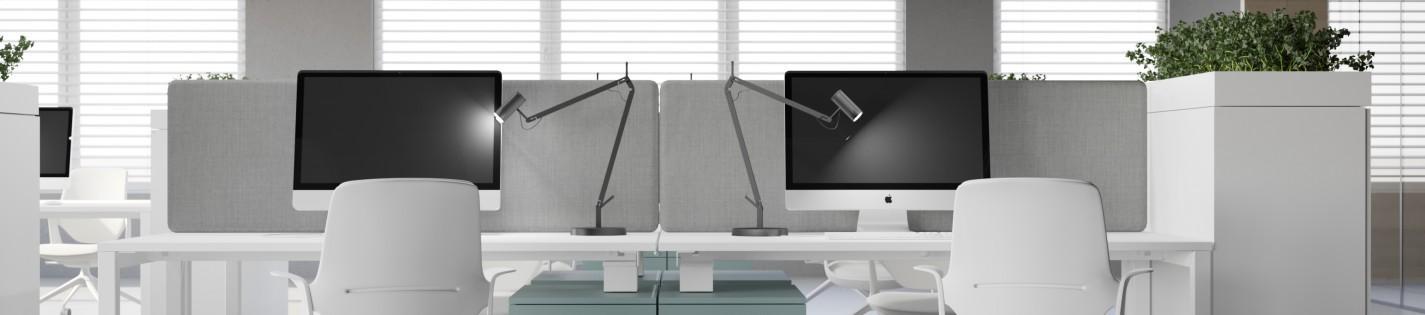
The right office furniture should be selected not only based on aesthetics, but primarily on function, ergonomics, team work styles, and the type of space. Individual workstations, open-plan spaces, meeting rooms, executive offices, receptions, and breakout areas all require different solutions. Well-planned office furniture should support working comfort, organisation, communication, concentration, and spatial flexibility.
Are you planning to modernise your current workspace? Or perhaps you are wondering what office furniture to buy for your company's new premises? Selecting furniture is a strategic decision. Appropriately selected furniture for a modern office directly translates into team efficiency, well-being, and the organisation’s image as an employer. In this guide, we advise on what to look for when choosing office furniture, how to tailor it to different zones, and how a design philosophy helps create a future-proof space resilient to change.
Where to Start When Choosing Office Furniture?
Before you start browsing office furniture manufacturers' catalogues, your first step should be a thorough assessment of your organisation’s needs. Modern office furniture is not merely a decorative element – it is a work tool. The success of an office fit-out depends on understanding how your team functions on a daily basis.
Ask yourself: do your employees mainly perform tasks requiring deep focus, or does their daily routine consist of dynamic, ad hoc meetings? What role does the hybrid working model play in your company? The answers to these questions will define the right direction and allow you to create a functional office tailored to real business processes.
What to Look For When Choosing Office Furniture?
When selecting furniture for an office space, it is worth following a set of permanent criteria that guarantee a successful, long-lasting investment. Avoid superficial trends – focus on parameters that build real value for users.
Ergonomics and Working Comfort
Sitting in a single position for several hours drastically reduces concentration and negatively impacts health. Ergonomic office furniture is the absolute foundation of any workstation. Choosing a desk and task chair that allow full adjustment customisation is key.
Workstation Functionality
Furniture must facilitate daily work. This means an appropriate size of worktops, intuitive access to documents, cabling, and power/data outlets, as well as seamless hot-desking if the company operates a desk-sharing system.
Storage and Organisation
The organisation of documents and personal belongings determines visual comfort in the office. Storage systems should be flexible – ranging from central cupboards to office storage units and shelving near workstations, through to modern office lockers, which are essential in a hybrid model.
Acoustics and Privacy
Noise is one of the main distractions at work. When choosing office furniture, we must consider solutions that improve acoustic comfort, such as free-standing acoustic booths or desk-mounted screens.
Flexibility and Mobility
A modern office must change alongside the organisation. Look for modular systems and furniture on castors or glides that allow a training room to be instantly reconfigured into a project workspace.
Design and Spatial Cohesion
An aesthetic, modern office fosters creativity and builds a sense of pride among employees. The appearance of the furniture should be consistent with the brand's visual identity (employer branding) and create a harmonious whole across all zones.
Comprehensive Decision Matrix
|
Selection Criterion |
Why Is It Important? |
Exemplary Balma Solutions |
|
Ergonomics |
Impacts comfort, health, and prevents fatigue. |
Height-adjustable desks (Sit&stand), advanced office chairs. |
|
Functionality |
Facilitates daily duties and organises the workstation. |
Ergonomic swivel chairs, adequate desktop surface area, under-desk pedestals. |
|
Storage |
Helps maintain order and implement a clean desk policy. |
Cupboards, office shelving, modular cabinet systems, employee lockers. |
|
Acoustics |
Supports deep concentration and ensures privacy. |
Acoustic booths, upholstered panels, office screens, and partitions. |
|
Flexibility |
Allows quick layout changes for different tasks. |
Mobile tables, modular tables, lightweight poufs, and screens. |
|
Design |
Enhances company image and builds psychological comfort. |
Cohesive furniture collections (Balma Plus, Stepps, Lumo), high-quality finishes. |
|
Durability |
Reduces long-term operational costs. |
Solid metal structures, certified materials, hard-wearing worktops. |
How to match furniture to different office Zones?
Today, office design is based on Activity-Based Working – dividing space according to the activities performed. See how to furnish an office for employees by dividing it into key functional zones.
Open-Plan Office Furniture
In open areas, the key is a compromise between integration and the opportunity for focus. Bench desks (multi-workstation desks) paired with acoustic screens work perfectly here to optimise space. To maintain order, each workstation should be complemented by office pedestals, and document cupboards and locker cabinets (lockers) should be placed along traffic routes.
Executive Office Furniture
A manager’s or director’s office requires furniture that combines executive design with maximum comfort. The focal point should be a wide executive desk and a high-end ergonomic chair. The arrangement is completed by elegant shelving, cupboards for confidential documents, and an intimate meeting area (a small conference table or club chairs with a coffee table).
Conference Room Furniture
This is the heart of corporate communication. Stable conference tables – traditional or modular, which can be configured based on the number of participants – form the foundation. Comfortable conference chairs (cantilever or four-legged) and mobile whiteboards to facilitate brainstorming are also essential.
Reception Furniture (Welcome area)
The reception creates the first impression. The key element is an ergonomic yet striking reception desk that conceals the employee's computer workstation on one side while welcoming guests on the other. The waiting area should feature comfortable office sofas, poufs, and occasional tables.
Soft Seating and Breakout Furniture
Regeneration is a prerequisite for productivity. Chillout and informal meeting zones gain functionality thanks to modular furniture. Soft seating, poufs, and sofas allow employees to freely change positions, take a short break, or have a casual chat over coffee. The arrangement should be enriched with office planters, introducing biophilic elements that reduce stress.
Summary of Office Zones
|
Office Zone |
Key Needs |
Recommended Balma Product Categories |
|
Open space |
Ergonomics, noise reduction, workstation organisation. |
Bench desks, under-desk pedestals, desk-mounted screens, lockers. |
|
Executive office |
Representation, prestige, comfort, privacy. |
Executive desks, dedicated task chairs, designer shelving and cupboards. |
|
Meeting room |
Presentation convenience, configuration flexibility, interaction. |
Conference tables, modular tables, ergonomic chairs, whiteboards. |
|
Reception |
"Wow" effect, brand identity, functional visitor handling. |
Reception desks, modern sofas, poufs, coffee tables. |
|
Soft seating / Breakout |
Regeneration, integration, informal atmosphere, well-being. |
Modular sofas, poufs, tub chairs, office planters. |
|
Hybrid office |
Resource sharing, mobility, rapid function change. |
Employee lockers, mobile tables, acoustic booths. |
|
Quiet work zone |
Isolation from stimuli, privacy for phone calls. |
Acoustic booths (single and multi-person), free-standing screens. |
How to Match Furniture to the Team's Work Style? (The Think Pro Philosophy)
At Balma, we believe that furniture should not be chosen solely according to catalogue categories, but primarily according to the ways and styles in which people work. This is the essence of our Think Pro philosophy. When designing or equipping a space, map your team's activities to the right furniture solutions:
- Individual Work (Focus): Requires isolation from external stimuli. The ideal setup is a single desk equipped with upholstered screens and a precisely adjusted office chair.
- Teamwork (Co-working): Requires a shared, unrestricted working surface. Large modular tables and mobile tables, which the team can freely rearrange during workshops, work best here.
- Ad Hoc Meetings (Quick Brainstorming): Brief project consultations do not require booking a conference room. It is enough to arrange a small meeting point using high tables with bar stools or mobile poufs and stools.
- Private Phone and Video Calls: In order not to disturb others in the open-plan office, acoustic booths are becoming an essential component of the communication zone, guaranteeing full discretion and excellent soundproofing.
Why Ergonomics is an Absolute Priority?
By choosing furniture for an ergonomic workstation, you are investing in the health and engagement of your employees. The modern approach to ergonomics goes beyond a properly contoured chair backrest. Today, a key trend is working in a sit-to-stand system (alternating sitting and standing).
Desks and tables with electric height adjustment allow for smooth position changes throughout the day without interrupting tasks. This dynamic way of working relieves the spine, improves circulation, and significantly reduces the feeling of fatigue at the end of the day. This system is complemented by monitor arms and dedicated media ports, so employees do not have to bend under the desk to find a power socket.
How to Plan Storage in a Modern Office?
The era of dusty, bulky, floor-to-ceiling cupboards is gone for good. Contemporary storage systems play a triple role: they organise documents, act as acoustic barriers, and divide office zones (e.g., separating traffic routes from desks).
When planning storage, combine three levels:
- Personal Storage (Close at Hand): Small under-desk pedestals or desk-side cabinets for essentials.
- Central Storage (Shared): Office shelving units and cupboards for lever arch files, accessible to the entire department.
- Locker Zone: In hybrid offices, employees do not have permanently assigned desks. Office lockers locked with a key, code, or card allow them to safely leave their laptop, documents, or personal items at the end of the working day.
Summary: Invest in a Space That Supports Your Business
Choosing the right office furniture for your company is a process that requires a combination of functionality, ergonomics, and unique design. Remember that an office should be a flexible ecosystem that lives and grows with your business. By opting for modular, well-thought-out furniture systems, you ensure that your workspace will easily meet the challenges of the future.
As an experienced office furniture manufacturer, at Balma we help translate these principles into real, inspiring interior designs. Discover our collections (such as Balma Plus, Sit&stand, Stepps, or Bbox) and create a space where your team can reach their full potential.
FAQ: Office Furniture Selection Explained
1. How do I choose the right office furniture step by step?
Start by analysing your team's work style and the floor area. Divide the office into zones (concentration, collaboration, relaxation, reception). Then choose furniture systems that combine ergonomic adjustability, appropriate storage systems, and a design consistent with your brand.
2. Is it worth choosing height-adjustable desks?
Most definitely. Desks and tables with electric height adjustment (sit-to-stand) enable employees to change their position from sitting to standing during the day. This reduces strain on the spine, improves circulation, and directly increases work efficiency and comfort.
3. What furniture is essential in a hybrid office?
The hybrid office relies on flexibility. Key equipment includes locker cabinets (for storing personal items when there are no permanent desks), mobile or modular work tables, and acoustic booths for conducting frequent video conferences without disturbing others.
4. How can furniture improve acoustics in an open-plan office?
Furniture can act as sound-absorbing barriers. It is worth choosing desks equipped with upholstered screens and acoustic panels, using tall modular shelving units to divide the space, and investing in acoustic booths that effectively isolate noise sources.