
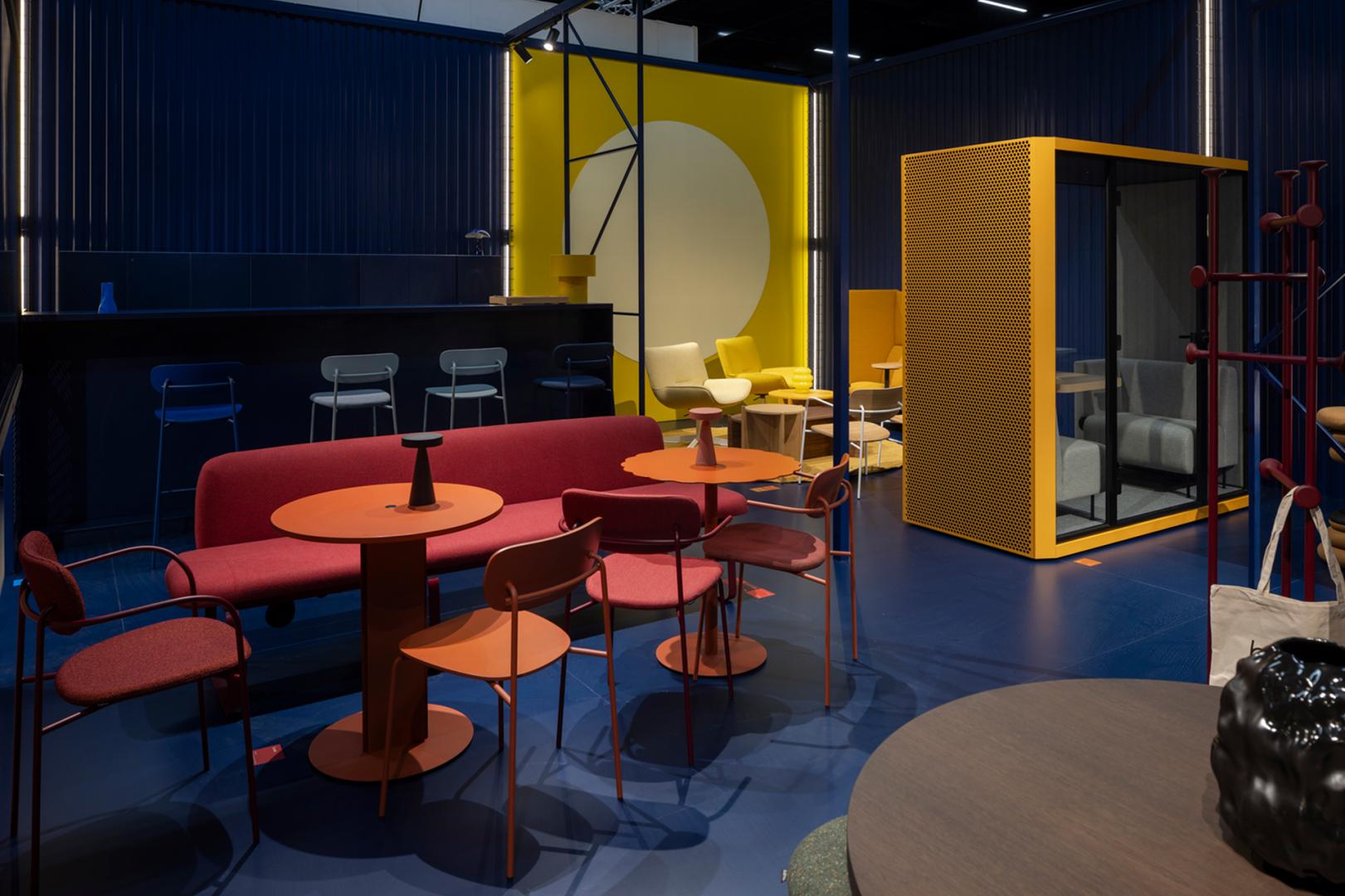
The international Orgatec trade fair in Cologne has long set the direction for the office and commercial interior design sector. This year’s edition clearly demonstrated that office architecture is undergoing a fundamental transformation. The office is no longer merely a place to perform daily duties – it has become a space for building relationships, nurturing wellbeing, and manifesting environmental responsibility.
Based on conversations with architects, interior designers, and investors, we have identified 5 key trends that define a new era in office design.
1. Silence is the new luxury: Acoustics embedded within the furniture structure
In the era of agile working models and the prevalence of open-plan offices, sensory overload from noise has become a primary driver of mental fatigue. Neuroarchitecture clearly indicates that uncontrolled noise drastically reduces employees' concentration capacity and overall wellbeing.
- The evolution of approach: Acoustic design is no longer just about retrofitting sound-absorbing panels into a finished interior. Modern architectural thought demands that acoustics be integrated into the very structure of the furniture and the materials used.
- Material solutions: Porous structures, precisely specified foam densities, and upholstery with high sound absorption coefficients are becoming integral components of office furniture, creating acoustic micro-zones for focus without the need to erect permanent partition walls.

Bbox acoustic booth, design: Piotr Kuchciński
2. Resimercial: Blurring the boundaries between office and home
The resimercial trend (a blend of residential and commercial) took on a new form at Orgatec. Architects are seeking solutions that counterbalance the raw, technological character of contemporary office architecture.
- Form and texture: Soft fabrics, curved lines in furniture, and natural finishes introduce domestic tranquility and a sense of psychological safety to commercial spaces.
- Community building: Shared spaces, lounge areas, and informal meeting spots are designed to encourage integration and the forging of authentic professional relationships.
The organic aesthetics and refined details in Balma’s furniture collections seamlessly blend domestic cosiness with the functional demands of a modern office.

Litt armchair, design: Maja Ganszyniec Studio
3. ESG Transparency: Certification at the heart of investment discussions
Questions regarding sustainability are no longer mere marketing declarations; they have become strict market requirements. Today, architects and investors expect complete transparency from manufacturers regarding ESG (Environmental, Social, and Governance) metrics.
During the trade fair, a resounding need emerged for precise data concerning:
- Product carbon footprint (LCA – Life Cycle Assessment),
- The origin of raw materials and timber certification (FSC, PEFC),
- Material recyclability (circularity).
At Balma, we have spent years building our manufacturing processes around the principle of environmental responsibility, striving to minimise the impact our furniture has on the ecosystem.
4. Agile work scenarios: Team flexibility
The traditional, static office layout no longer meets the needs of hybrid teams. A contemporary workspace must adapt to the tasks being performed at any given moment – from deep-focus work to dynamic group workshops.
The answer to these challenges lies in modular and mobile furniture, which empowers users to independently reconfigure their surroundings:
- Height-adjustable desks (such as the LS3 series): These enable a seamless transition from sitting to standing, supporting workplace ergonomics and personal dynamics.
- Flexible screening and partition systems (such as the Tura system): These allow for the rapid zoning of new areas within the office, responding to the team's immediate needs without requiring structural alterations.

LS3 desk, design: Balma Design Team; modular screen Tura, design: Piotr Kuchciński
5. Precision craftsmanship and durability: Quality that lasts
The final, yet equally crucial takeaway is the renewed appreciation for craftsmanship and longevity. Driven by growing ecological and economic awareness, investors are rejecting disposable products in favour of fit-outs highly resistant to intensive use. Materials specified for commercial projects must combine the durability of steel and robust engineering with supreme comfort. Precision manufacturing, highly durable lacquered and upholstered finishes, and intelligent structural design ensure that the furniture retains its functional and visual properties over many years of heavy use.
Summary
The final, yet equally crucial takeaway is the renewed appreciation for craftsmanship and longevity. Driven by growing ecological and economic awareness, investors are rejecting disposable products in favour of fit-outs highly resistant to intensive use. Materials specified for commercial projects must combine the durability of steel and robust engineering with supreme comfort. Precision manufacturing, highly durable lacquered and upholstered finishes, and intelligent structural design ensure that the furniture retains its functional and visual properties over many years of heavy use.
Frequently Asked Questions (FAQ)
1. What is the resimercial trend in office design?
The resimercial trend involves integrating elements of home furnishings (materials, soft forms, warm lighting) with the functionality and durability of commercial furniture. Its objective is to create a welcoming work environment that supports employee wellbeing.
2. How do height-adjustable desks impact ergonomics?
Height-adjustable desks (e.g., LS3) allow users to regularly alternate their working posture between sitting and standing (sit-stand working). This reduces spinal strain, improves blood circulation, and sustains higher energy levels throughout the working day.
3. Why are ESG metrics important when specifying office furniture?
ESG metrics assess the environmental and societal impact of a product and its manufacturing process. For investors and architects, specifying furniture with eco-certifications is crucial when applying for green building certifications, such as LEED or WELL.
Content & Editorial:
- Natalia Hrehorowicz, Marketing Department Fabryka Mebli Balma S.A.