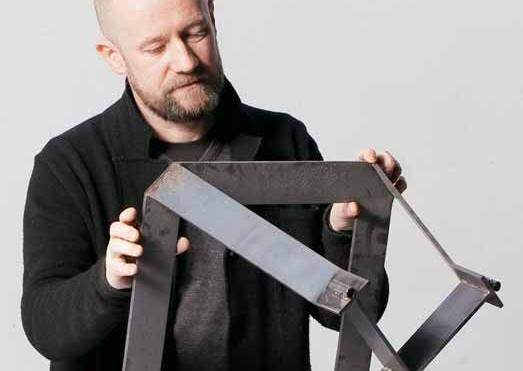
The company's chief designer, architect Piotr Kuchciński, reveals in a candid interview the behind-the-scenes story of creating iconic collections such as In, Mixt, and Plus, which have earned a permanent place in the history of Polish design. He explains the difference between conventional furniture design and an architectural approach, where every object is treated as an integral complement to the space. He also points out why creating products with maximum durability and the highest quality of craftsmanship is becoming the foundation of contemporary design today.
The beginnings of Piotr Kuchciński’s collaboration with the Balma brand
Magdalena Kaniewska: You have been co-creating the history and success of Balma since its inception. What did those early days look like? What has changed over the years? Is it true that your first commissions were actually related to graphic design?
Piotr Kuchciński: I cannot pinpoint the exact date when I first showed up at Balma. I think it might have been 1995. However, I distinctly remember the day when, at the invitation of my childhood friend who was the sales director at the time, I met Mr Ryszard Balcerkiewicz—the founder of Balma. The company was preparing for a major photoshoot to capture its new desk and computer table designs. Thus, the invitation was specifically dedicated to collaborating on the new catalogue. The task was to develop its conceptual theme and the set design. At that time, I envisioned myself as an architect, and I treated the collaboration with Balma rather as a coincidental venture—one that was nice to have, since I have always enjoyed diverse activities... and that remains true to this day.

MK: And what happened next?
PK: It was certainly a project-by-project collaboration initially. The next venture we worked on was probably the set design for a trade fair stand. Balma used to exhibit every year at the Poznań International Fair, which back then was the most prestigious exhibition and furniture event in Poland. Since that time, I have accompanied Balma to virtually every exhibition event, both domestically and abroad, including the Cologne trade fairs. It has always brought me immense satisfaction.
The In collection as a technological and brand image breakthrough
MK: When did the moment arrive when you felt ready and wanted to try your hand at your first proper furniture design brief?
PK: I think it was a mutual moment for both of us—myself and Mr Ryszard. Together, we concluded that I was probably ready. The seeds of that first project were sown in 1998 following the Orgatec trade fair. It took some time to approach the subject of executive furniture design. We began working on the In executive furniture collection in 2000, or perhaps even earlier. It was a highly intricate and complex process for a variety of reasons. For Balma, it represented a very bold and challenging decision, as it required venturing into entirely new manufacturing technology.
MK: What technologies were you utilising at that time?
PK: Up to that point, all Balma furniture had been manufactured using melamine-faced boards, and the frames were welded from steel profiles. This technology, of course, remains the most vital in production to this day. However, during the discussions regarding the new executive suite—I cannot recall who initially suggested it—concepts emerged to introduce natural wood veneer technology. The second technological innovation was the use of aluminium profiles. Because of this, the In collection was truly revolutionary. For me, it was the first such significant project in the role of an architect-designer. Years later, I can confidently state that it was also probably my most important furniture project completed for Balma.
MK: Ultimately, the In executive furniture collection made its debut in 2001. Interestingly, and worth emphasising, these furniture pieces are still functional today and enjoy recognition among discerning clients. It is impressive that the design has stood the test of time.
PK: (...) We genuinely managed to hit the mark with those forms. In fact, I have always searched for such shapes, and that remains true today (...). I assume that basic geometric shapes will indeed always remain relevant and are unlikely to grow obsolete, as demonstrated by the history of design and aesthetic culture as a whole.
Architectural inspirations and design trends
MK: Where do you draw your inspiration from? Is it a case of ideas simply popping into your head, or do you closely monitor trends in foreign markets? Or perhaps the final outcome is a consensus reached during discussions with the boards of the companies you work with?
PK: Yes, a little bit of everything. Because it really is the case that various ideas come to mind, particularly when I am working intensively on certain projects, (...) during those times I feel that the mind opens up immensely to different topics and designs. I always write them down—or rather, sketch them—because I work a lot by hand, especially at the beginning. Sometimes I put these emerging ideas aside and forget about them, while other times I return to them later during discussions about other commissions, tailoring them to a specific order.
MK: What guides you when designing furniture? Fads? We already know the answer to that is no. Trends? To some extent, yes. Needs expressed by the client? Yes. The company’s commercial requirements? Yes. Or is there something else?
PK: It is quite obvious that I do not design or lead projects that go against my instincts. I must be fully convinced of all the ideas, solutions, details, lines, shapes, and finishes—they simply have to appeal to me. So that is absolutely always the most critical factor. And apart from that, all those needs we mentioned… Regarding trends, of course, every designer loves to claim that they do not follow trends. However, that is not entirely true. I certainly try to avoid short-lived fads that fade quickly. But when it comes to broader macro-trends concerning aesthetics, functionality, or technology, I absolutely embrace them.
The role of visual communication and photoshoots
MK: Which of the projects done for Balma has stuck in your memory the most? Which was the most difficult, the most demanding, and which one are you proudest of?
PK: The aforementioned In collection. I believe it was truly the most important and groundbreaking, as it opened up an entirely new path. It became a sort of manifesto for Balma and Ryszard Balcerkiewicz himself. It communicated clearly that Balma did not want to stick rigidly to a single technology, but was instead interested in development. And this was a leap-forward development—not evolutionary or slow—characterised by thinking completely outside the box. It was one of those projects that propelled the brand to a much higher level, not only in terms of design and functionality but also brand image. Following the In collection, we began communicating with the market differently, paying immense attention to photoshoots designed to best reflect the arrangement of our furniture within diverse spaces.
MK: In a single sentence—the bar was set incredibly high.
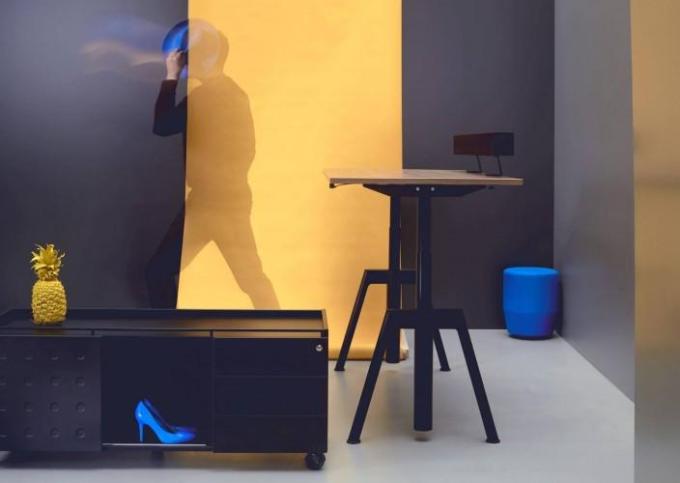
PK: Yes. That photoshoot established a new standard for the visual presentation of our collections. In 2004, we created a collection that was very important to me: the Mixt executive and conference furniture range. It was an extensive collection featuring a vast variety of furniture pieces. My idea was to showcase them in highly diverse contexts and functionalities. We crafted a narrative where, on every single page of the catalogue, the furniture was shown in a completely different guise, an entirely different space, and an alternative colour palette.
MK: That sounds like a massive undertaking.
PK: Yes, it absolutely was. I believe it was the largest photoshoot in Balma's history. In terms of cost, time, and energy, it almost eclipsed the entire work dedicated to the furniture itself.

MK: Did another project emerge later that rivalled that first one and represented the next big breakthrough?
PK: The Plus furniture project was also highly significant for me, and I believe for the company as well.
MK: Why?
PK: Because it was the first, and probably only, project that engaged the entire company so deeply. Special workshops were organised at the time, dedicated to developing solutions for this collection. An enormous volume of material was generated regarding office workstyles and user needs. Those workshops were fantastic. They provided us with countless insights into workplace behaviour. We acted out scenarios: how we behave in the office, what tasks we perform, what we need within arm's reach, what distracts us, what we require, and so on.
MK: Presumably, this yielded many valuable observations, conclusions, and materials that could be utilised in subsequent projects?
PK: Yes, definitely! There was so much information that I was initially alarmed that I simply wouldn't be able to analyse, digest, and implement it all on my own.
The architect’s approach vs the conventional furniture designer’s approach
MK: Could you shed some light on how the process of creating a piece of furniture looks? I know from Balma's founder that your great advantage has always been bridging the roles of designer and architect—the ability to merge a designer’s creativity with technological and production constraints.
PK: Almost always, the inspiration—whether minor or major, precise or general—originates from the factory side.
MK: I suspect that attending various international trade fairs also provides you with plenty of ideas, doesn't it?
PK: To some extent, of course, but history and the past are vital to me... Because I am deeply interested in the history of design; I am very fond of vintage furniture and I follow this history closely. It is often colloquially said that everything has already been done. I believe a vast amount has been done, but perhaps not absolutely everything, especially regarding materials. That is exactly where I see the future.
MK: Has the thought ever crossed your mind that you are more of a furniture designer than an architect? Or do you still feel like an architect who designs furniture?
PK: On the whole, I constantly feel like an architect in a very real sense, because I think about furniture architecturally too. And this isn't just about engineering; it is more about treating a piece of furniture as an object within a space.

MK: What do you mean by that?
PK: It means that whenever I design furniture, I use it to complement the space. While designing, I arrange furniture pieces together, as well as with other objects. So, I think very architecturally, but also about the furniture piece itself as a form of architecture—meaning it must look excellent from every angle and be well-received. Therefore, I feel I have an architectural approach to design (...) and in that sense, I always feel like an architect who designs furniture. Designing furniture is definitively my way of finding fulfilment within architecture. I cannot recall exactly when, but it was probably after my first furniture projects at Balma that I realised I didn't want to be an architect trying to find fulfilment in the traditional profession (...) because I saw that the traditional career path wasn't for me. I wouldn't have been able to achieve even a fraction of the satisfaction and success that I managed to achieve very rapidly in furniture design.
Office furniture design in the context of ESG principles and the Circular Economy
MK: I wouldn't be myself if I didn't ask about the ESG area (...). When designing, do you take into account social and environmental aspects (such as the circular economy) associated with a given project?
PK: I think a major challenge for Balma is that the product specifics make it difficult to incorporate recycled materials. Our primary manufacturing technology remains particleboard and steel; there is little room for modification here. However, we are naturally considering how we can respond to the trend towards a circular economy. (...) In my personal approach to design, the most important thing—to put it most clearly and briefly—is simply not to design waste! That is the biggest problem. Therefore, first and foremost, I ensure that for aesthetic and functional reasons, Balma furniture lives as long as possible, and that the materials and technologies used in production guarantee the highest durability, quality, and design excellence.
MK: That is vital. That is essentially the foundation of a circular economy—ensuring that the product life cycle is as long as possible. Perhaps, however, it will be possible to develop a solution that utilises recycled elements, even if only partially?
PK: Yes, we will try. Perhaps we can develop something of this nature with students from the University of Fine Arts in Poznań, with whom we are planning a collaborative conceptual project in the upcoming academic year.
MK: Do you have any specific professional dreams regarding design? Is there anything left in your "drawer" that has not yet seen the light of day?
PK: Yes, absolutely. I have a few... This year I decided that I want to execute a few truly independent, personal projects—essentially working on those concepts straight out of the "drawer" (...). They are intended to respond to my personal design and functional needs, because all these objects, items, and furniture pieces will be related to my own home space. So, I am inviting and will continue to invite companies I have known for many years to join these projects—including Balma, of course—and together with these manufacturers, I would like to bring them to fruition under my own name.
MK: I wish you the best of luck then, and many more projects on the scale of the In collection. Thank you for the conversation.
Piotr Kuchciński Architect and one of the most awarded Polish designers. A graduate of Architecture from the Poznań University of Technology, winner of the "Designer of the Year" title (IWP, 2012) and "Creator" ("DesignAlive", 2016). His designs have won prestigious international accolades, including the "Red Dot Design Award" and the "iF Design Award". He has been associated with the Balma brand since the 1990s and is the creator of the iconic In and Xeon executive office systems.
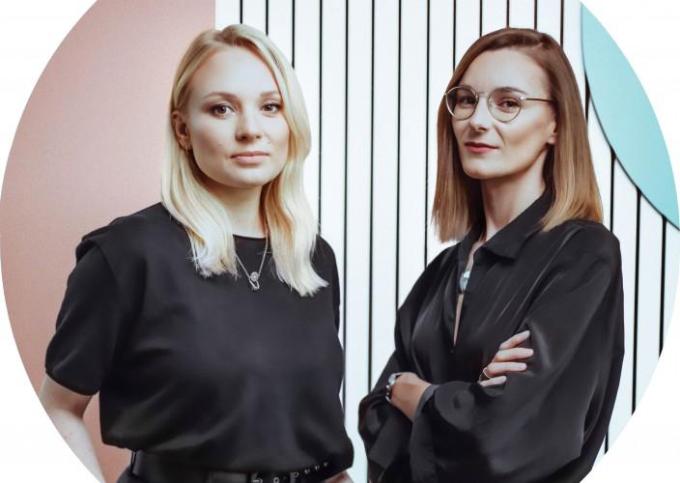
Author: Magdalena Kaniewska, ESG Manager at Fabryka Mebli Balma. An expert combining sustainability and ESG with positive psychology and corporate communication. She supports building an organisational culture based on responsibility, mindfulness, and relationships.