Sustainability is Not a Trend – It Is Concrete Action
The Circular Economy (CE) is, in essence, an operational model that aims to minimise waste production. Instead of the traditional "take, make, waste" approach, raw materials are reused multiple times, and product lifespans are extended for as long as possible. In the UK and across Europe, this ecological approach is fast becoming the industry standard – driven by overarching guidelines such as the European Green Deal, as well as national environmental strategies. At Balma, however, we do not wait for top-down mandates. For years, we have been growing sustainably, proving that modern business can – and must – go hand in hand with environmental stewardship.
On-Demand Manufacturing: Zero Resource Waste
All our furniture is manufactured to specific orders under an "on-demand" model. We do not produce for stock, nor do we fill warehouses with ready-made products. We listen to our clients' needs and deliver precise solutions tailored to their requirements. This allows us to scale sustainably while preventing the waste of precious resources.
Modular Furniture – Limitless Space Planning Possibilities
Contemporary workspaces demand flexibility, functionality, and a distinct character. Balma products stand out for their practical form and multidimensional versatility. They can be seamlessly combined to create lightweight, eye-catching modular configurations. As a result, interior fit-outs become straightforward, allowing offices to be rapidly reconfigured to meet changing user needs.
Optimised Material Management
Balma furniture is manufactured using high-grade particle boards (chipboards) that meet the strictest quality standards and hold relevant industry certifications. We partner exclusively with market leaders who prioritise sustainable development. We are equally meticulous about the provenance of other components – the steel we source is recycled, with post-consumer and pre-consumer recycled content reaching up to 90%, depending on the supplier. Crucially, this material is fully recyclable. We optimise resource consumption as early as the production planning stage, utilising advanced technologies for the precision cutting of boards, sheet metal, and profiles. This allows us to keep manufacturing scrap to an absolute minimum.
Built to Last – Repair Instead of Replace
At Balma, we create furniture with a timeless design, ensuring the highest build quality and durability. Since our entire manufacturing process is based in Poland, we offer our clients a unique advantage: if required, they can replace only selected components of a furniture piece rather than the entire product. This approach not only significantly reduces the carbon footprint but also aligns perfectly with EU ecodesign regulations, which place immense emphasis on product durability and repairability.
State-of-the-Art Powder Coating Plant and In-House Wastewater Treatment
We constantly invest in our machinery fleet to ensure our manufacturing processes have the minimal possible impact on the local environment. By introducing an automated powder coating line, we have reduced paint consumption, particulate emissions, and our demand for gas and energy. Furthermore, we have replaced traditional chemical pre-treatment with a more eco-friendly zirconium phosphating process. Building our own industrial wastewater treatment plant was another massive step forward. It allows us to neutralise and safely treat industrial effluent before disposal, strictly minimising our environmental footprint.
Responsible Packaging: Cardboard Replacing Plastic Film
At Balma, we ensure that our ecological approach accompanies our products all the way to delivery. For this reason, we are consistently phasing out plastic film in favour of corrugated cardboard packaging. The cardboard we use consists of up to 93.5% recycled content and is fully recyclable. Crucially, any cardboard waste generated during production is converted into eco-friendly void fill packaging material using a specialised shredding machine. To secure our furniture, we also use strapping bands made of 100% recycled materials. This significantly reduces our consumption of virgin raw materials and adhesive tapes, while our transport logistics rely on our own reusable pallets.
Partnership with Stena Recycling – Turning Waste into Energy
Since 2023, Balma has been working in close partnership with Stena Recycling, a market leader in responsible waste management. Together, we ensure that paper, cardboard, plastic, and packaging waste are meticulously segregated according to the highest industry standards. This ensures they are successfully redirected into recycling streams or used as raw material for Refuse-Derived Fuel (RDF). In this way, manufacturing residues (such as wood, fabrics, or rubber) are given a second life, serving the cement and energy industries as a safe, sustainable energy source.
The Future of the Industry and Tangible Benefits: Summary
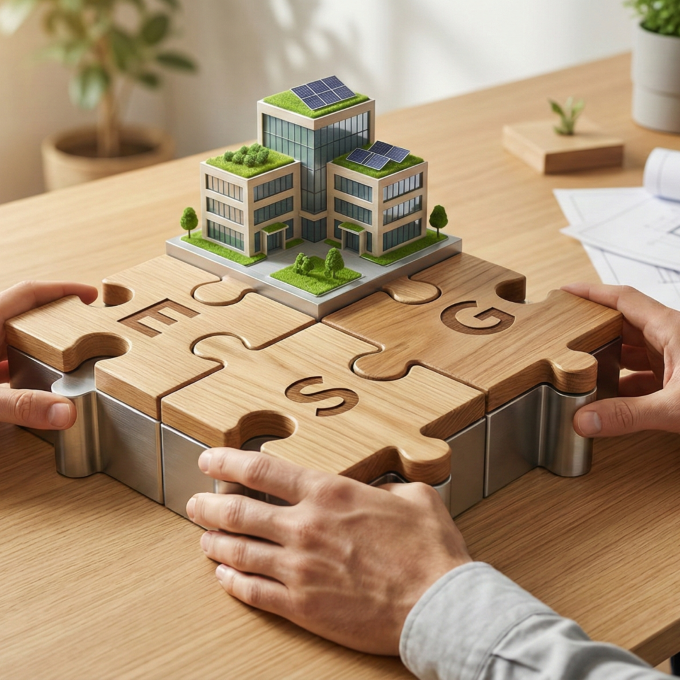
A PKO Bank Polski report from October 2025 forecasts steady growth for the domestic furniture market up to 2030, identifying ecology as one of the primary drivers of this expansion. This trend aligns seamlessly with Balma’s ESG strategy for 2024–2026, which focuses on ethical and responsible business practices. The modularity of our furniture, its timeless design, on-demand manufacturing, eco-friendly packaging, and our strategic partnership with Stena Recycling are the ultimate proof of how we implement Circular Economy principles in practice. We prove that sustainability is not a passing fad, but a conscious and profitable business strategy that brings tangible benefits to both commerce and the environment.