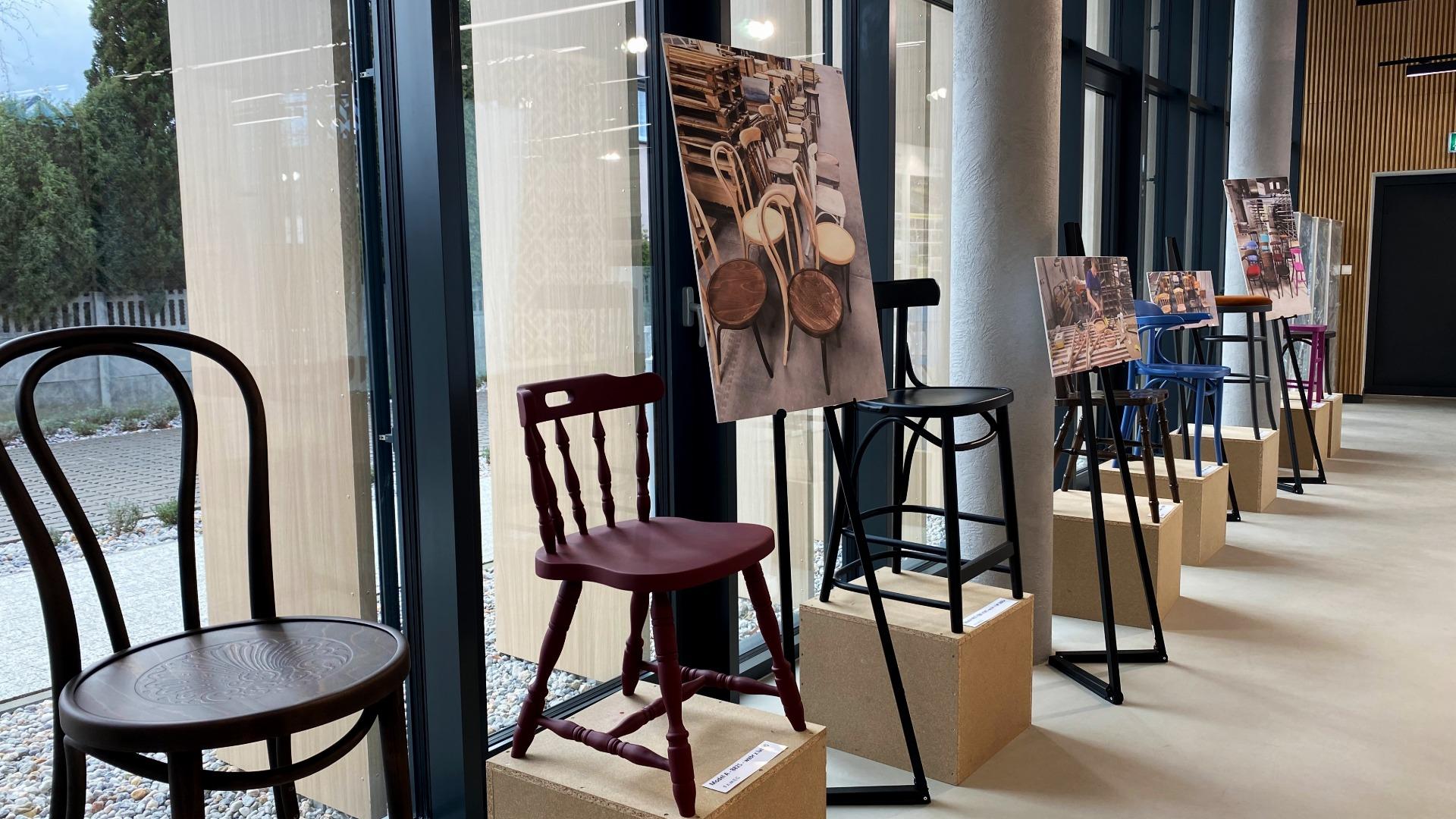
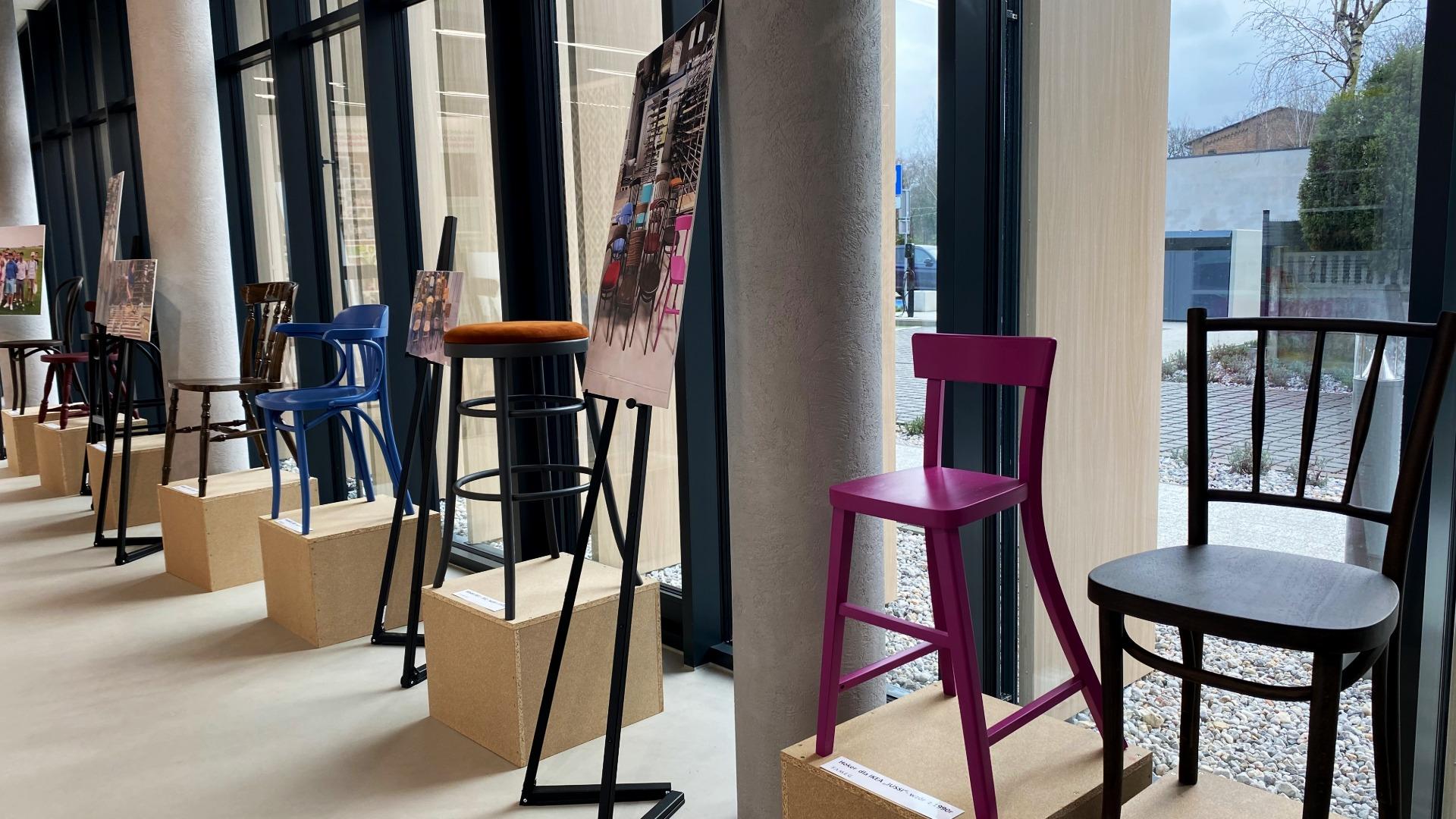
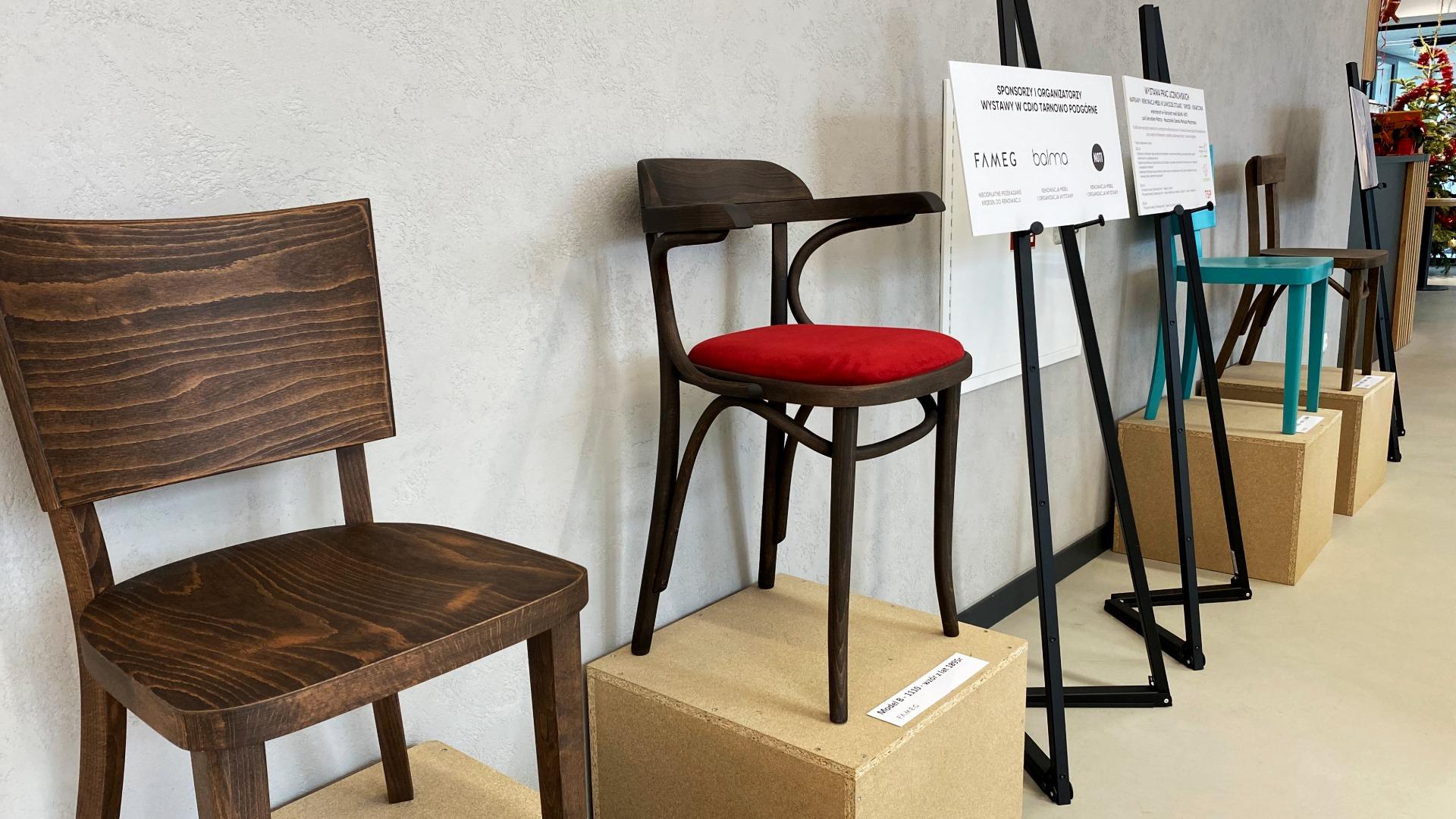
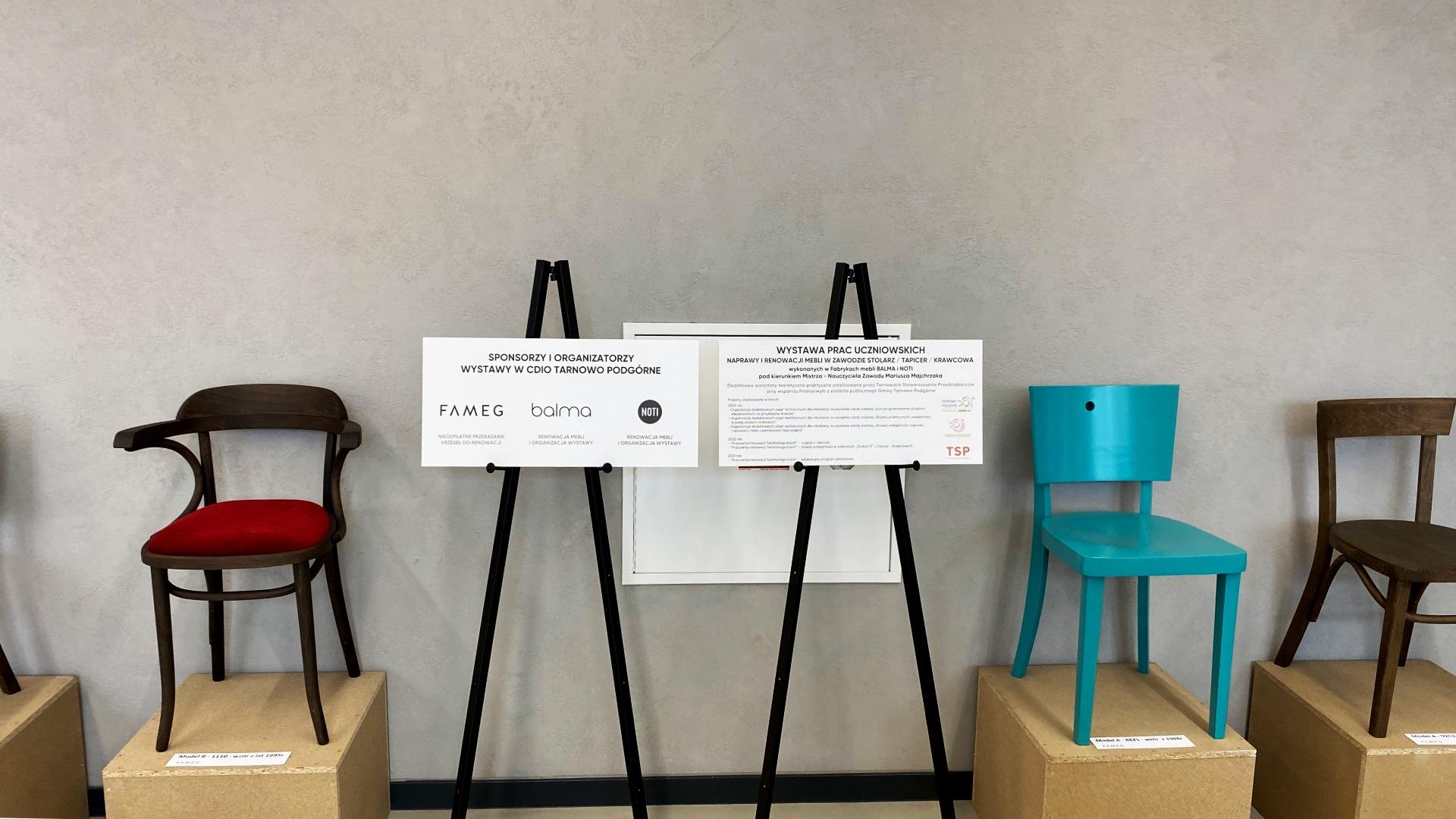
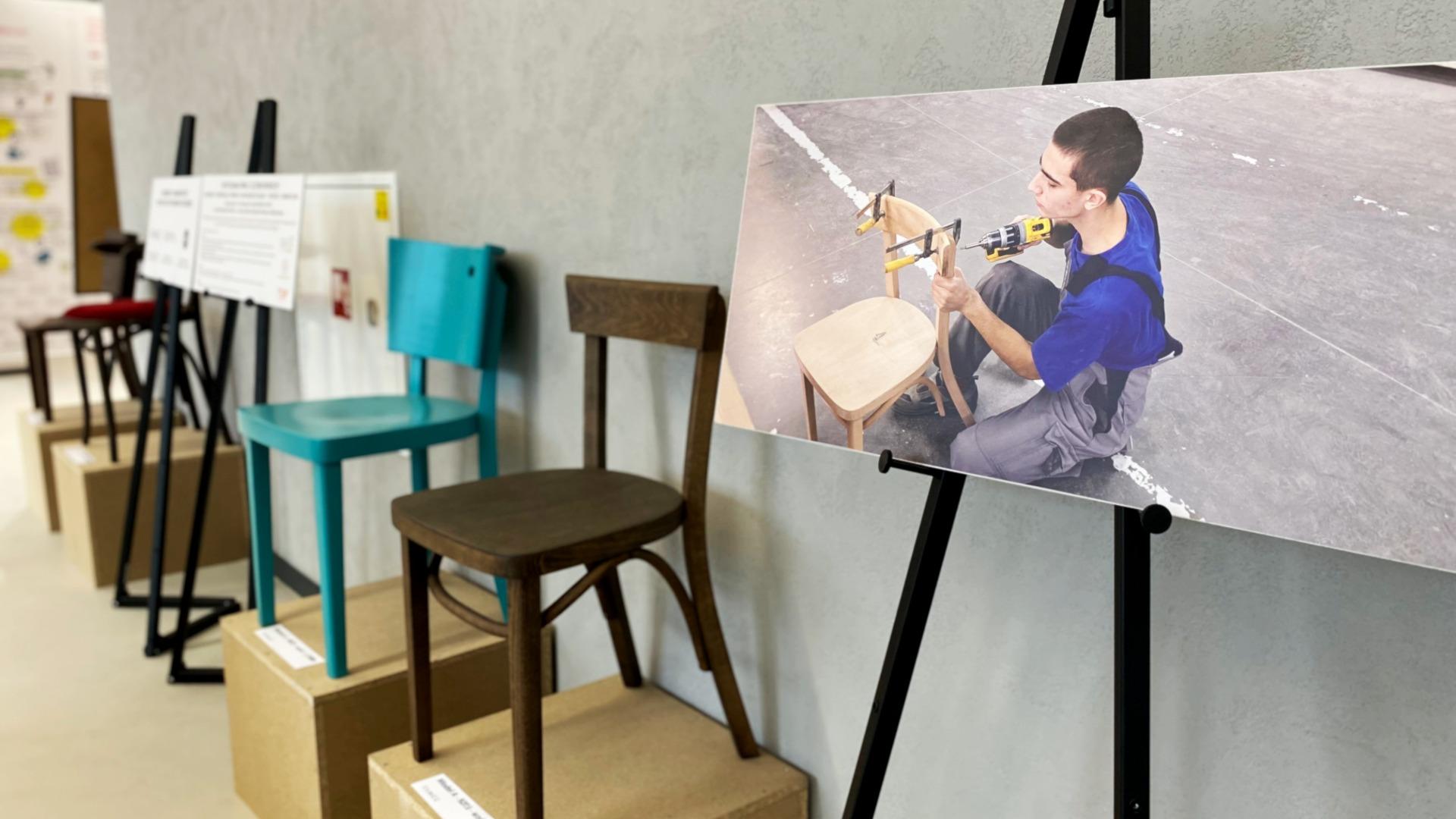
In an era of growing digitalisation and automation, unique joinery skills and traditional craftsmanship are becoming particularly valuable. At Fabryka Mebli Balma, implementing ESG (Environmental, Social, Governance) principles means taking tangible action for the local community and younger generations, among other initiatives. Between 2022 and 2026, in collaboration with vocational school students, we carried out an exceptional restoration project on antique chairs. Magdalena Kaniewska (ESG Manager at FM Balma) and Mariusz Majchrzak (Production Master Craftsman at FM Balma) discuss the behind-the-scenes of this four-year initiative, the training of future joiners, and a shared passion for creating durable furniture.
Magdalena Kaniewska: When did the chair restoration project begin, and what was its core vision?
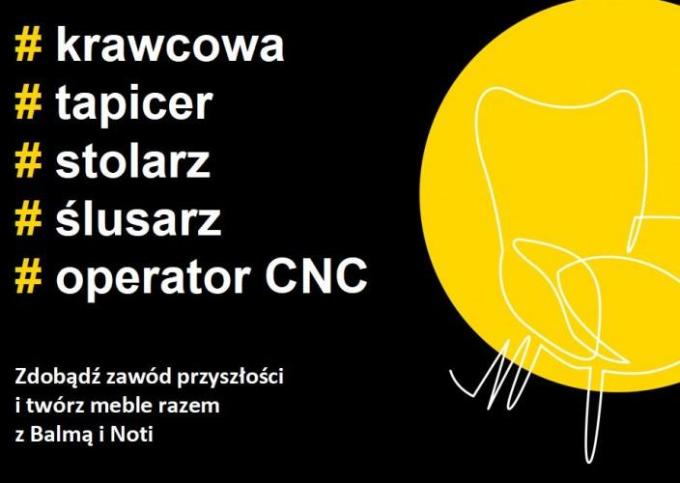
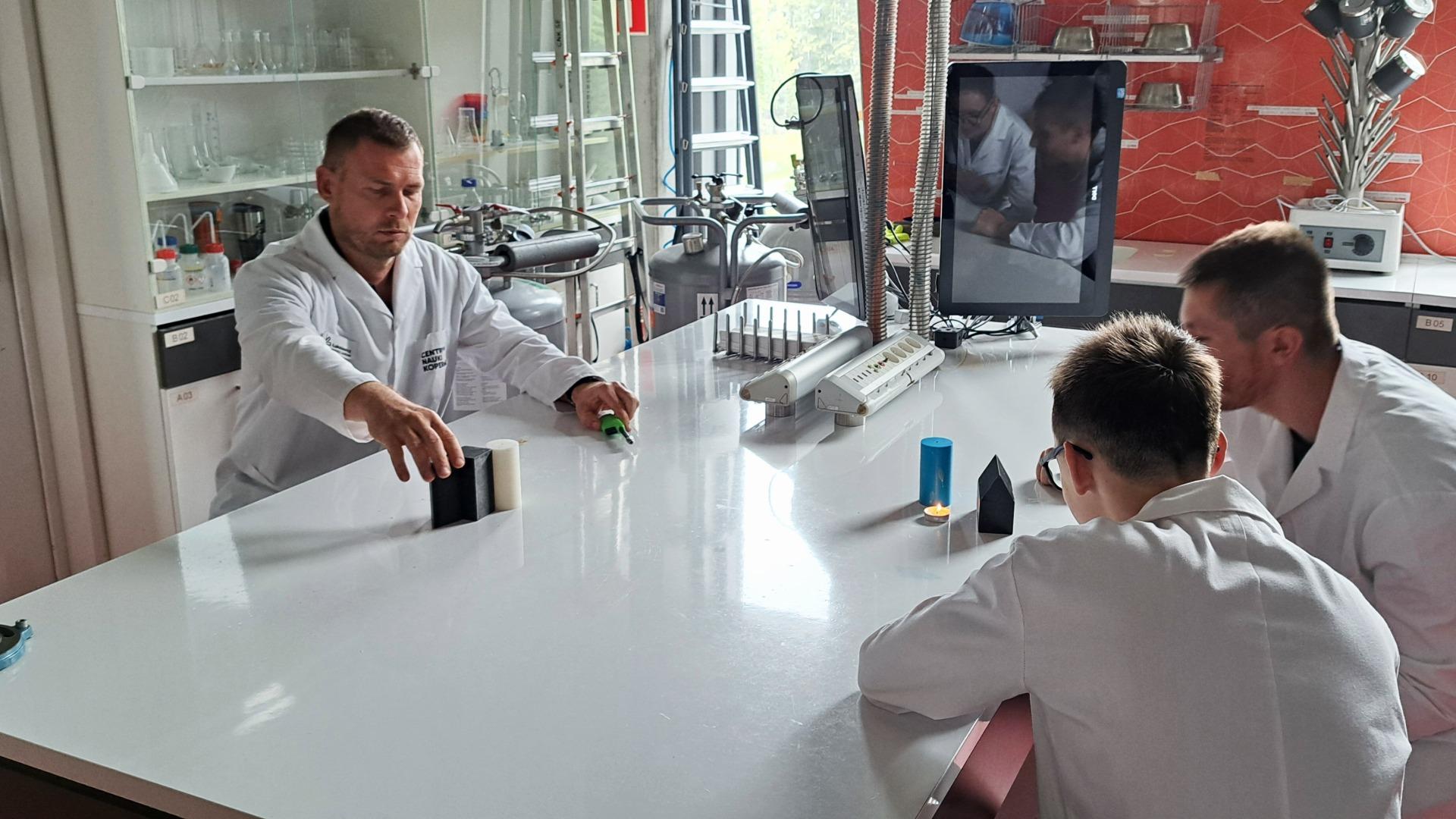
Mariusz Majchrzak: The project to restore the chairs we received from Farmeg started in January 2022. Its final edition took place in June 2026, meaning we completed three editions in total under the umbrella title: “Developing Knowledge and Skills in Furniture Restoration and Joinery Techniques.” Each edition was funded by the Municipal Office of Tarnowo Podgórne as part of its educational funding for young people. Our goal was to provide vocational school students with a real hands-on environment to acquire practical trade skills—including precision, handcrafted joinery—as well as to familiarise them with the technical documentation and working drawings used in cabinetmaking. Furthermore, we wanted to foster integration among these young people, who have formed a strong, supportive community here.
MK: Where did the idea for such an initiative actually come from?
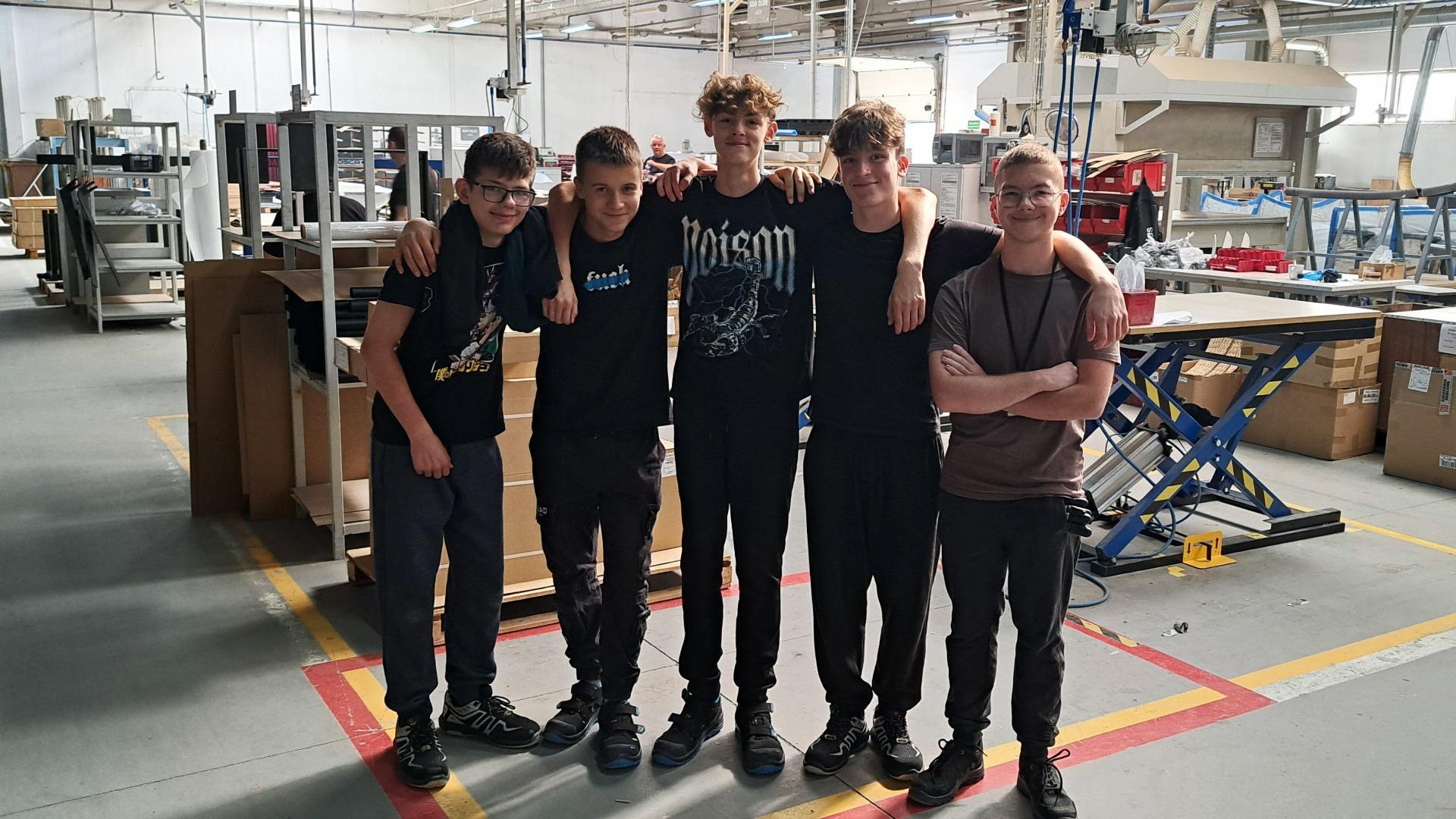
MM: The initiator was the founder of Balma, Ryszard Balcerkiewicz. Right from the start, he actively supported the project by sharing his knowledge and experience, inspiring the students with his passion for work and craftsmanship. It is worth highlighting that our cooperation with young people—particularly with the Technical Secondary School Complex in Tarnowo Podgórne, an initiative pioneered by Mr Ryszard—has been ongoing since the school’s founding in 2020. We established a sponsored class to enable young people to train as joiners and cabinetmakers. As part of their curriculum, students complete practical apprenticeships in our factory under our supervision. Upon graduation, we offer them full-time employment, an opportunity taken up by over 50% of the students.
MK: Returning to the chair project, which organizations were involved in bringing it to fruition?
MM: The project brought together Balma, our sister company Noti, the Technical Secondary School Complex in Tarnowo Podgórne, the Building and Woodworking School Complex in Poznań, and the Tarnowo Business Association. We were united by a common goal: supporting young people in building professional competencies and sparking a passion for the furniture industry. It is worth stressing the vital role played today by graduates of the local school who chose to stay with us after years of vocational training (this group represents between 50 and 70 per cent of all apprentices completing work placements at Balma).
MK: How many students were involved in carrying out this task?
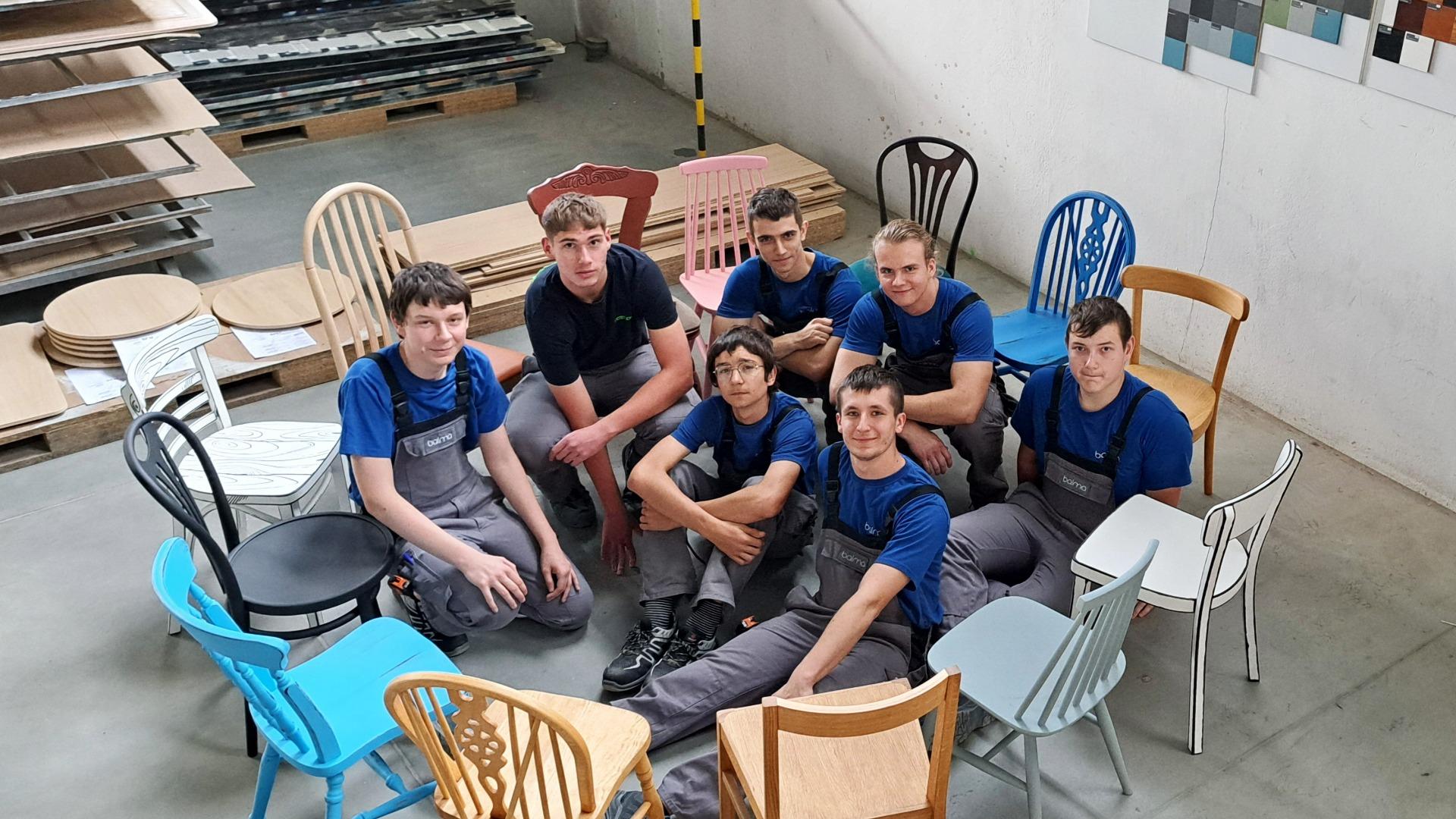
MM: Each year, around 14 apprentices at Balma participated in the project. Under my supervision, they took on the demanding task of restoring antique 19th- and 20th-century chairs, gaining invaluable professional experience along the way.
MK: How many chairs were restored in total?
MM: Altogether, we restored 50 chairs:
- 7 in 2022,
- 12 in 2023,
- 12 in 2024,
- 14 in 2025,
- and 5 in 2026.
MK: How would you sum up this project?
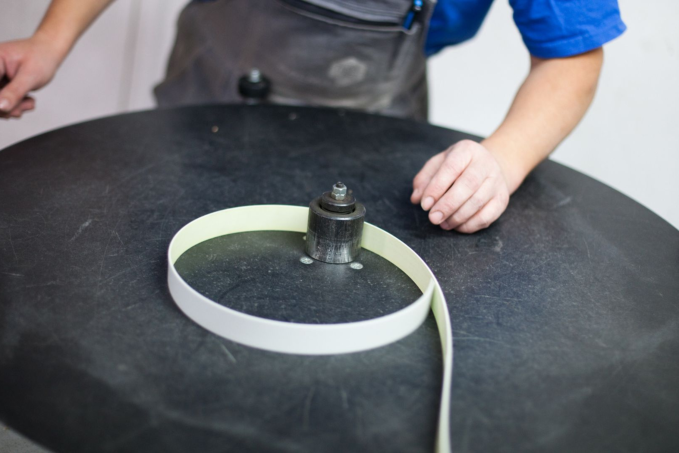
MM: It was a immensely valuable project—both for the students and for us as an organisation. The young people gained practical skills and learned the principles of working in a manufacturing environment, including occupational health and safety standards, as well as gaining insight into how a modern company operates. The students worked with various materials, mastering restoration techniques, defect classification, and the correct application of tools and surface finishes.
It is also worth noting the social impact—most of the restored furniture was donated to several charity auctions for the Great Orchestra of Christmas Charity (WOŚP).
MK: What brings you the greatest satisfaction when working with young people?
MM: The biggest drive for me is watching these young people grow—from their first hesitant steps to the point where they gain confidence and pass their professional exams. It’s a process you can genuinely see day by day. I’m proud to say that, to date, we have achieved a 100% pass rate on state vocational exams, which gives me immense personal satisfaction and pride in our youth.
MK: Thank you for the interview!
Would you like to learn more about Balma’s approach to sustainability and circular architecture?
Explore our approach to ESG and responsible design: sustainability
Mariusz Majchrzak – Production Master at Fabryka Mebli Balma SA, with the company since 2006. With passion and dedication, he guides young people in their professional development, introducing them to the art of fine joinery and craftsmanship.
Magdalena Kaniewska – ESG Manager at Fabryka Mebli Balma SA. An expert bridging sustainability and ESG with positive psychology and communication. She supports building an organizational culture rooted in responsibility, mindfulness, and meaningful relationships.